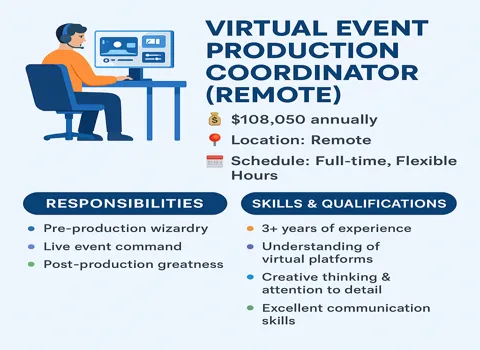
Virtual Event Production Coordinator (Remote)
Step Into the Spotlight
Picture this: You’re the person who makes virtual events feel smooth, engaging, and unforgettable. From a live-streamed corporate keynote to an online trade show buzzing with activity, you’ll be the one behind the curtain making sure it all clicks. That’s what this
Virtual Event Production Coordinator role is about. It’s not just about pressing “Go Live”—it’s about shaping the whole experience, from planning to applause.
And yes, this role is entirely remote. Work where you feel most focused, whether that’s a home office, a quiet café, or a little corner of your living room. The salary?
$109,970 annually. Solid pay for work that’s both creative and technical.
Why This Role Feels Different
Online events are now as real as in-person ones. Think about the last digital conference support session you joined—maybe it was flawless, or perhaps you sat there waiting for slides that wouldn’t load. You’ll be the person who makes sure it’s always the first one, never the second. This job isn’t just clicking buttons—it’s like running a virtual stage, keeping hundreds of people engaged, and turning an ordinary screen into a shared experience.
This isn’t copy-paste work. It’s messy at times—like troubleshooting a last-minute speaker audio issue while managing chat Q&A. But that’s what makes it fun. You’ll bring calm to the chaos, and your work will shape how companies, clients, and communities connect.
What You’ll Be Doing
Let’s be clear—this isn’t about sitting back while software runs itself. Here’s what your days might look like:
- Virtual event logistics: Line up schedules, prep speakers, and double-check every platform before showtime.
- Webinar coordination: Run rehearsals, manage live sessions, and handle surprises (like when someone’s Wi-Fi acts up mid-presentation).
- Virtual stage management: Think of yourself as the show caller. Keep things flowing, cue transitions, and help speakers shine.
- Event technology platforms: From Zoom to Hopin to custom streaming setups—you’ll learn them inside out.
- Event scheduling and operations: Timelines, checklists, and workflows—you’ll keep them tight so nothing slips.
It’s a mix of planning, tech, and people skills. Some days you’ll feel like a director, other days like a problem-solver. Always, you’ll feel essential.
Tools of the Trade
We’re not just running events; we’re building experiences. That means leaning on the right tools:
- Live streaming production: From overlays to transitions, streams will look polished.
- Event production workflow systems: You’ll track tasks so projects move forward without anyone dropping the ball.
- Remote event support tools: Think help desks, chat mods, and live troubleshooting stations—you’ll be part of that safety net.
You don’t have to know every tool right away. But you do need to be curious, willing to learn, and unafraid of pressing buttons to see what happens (in test mode, of course).
The People Side of Things
Let’s talk human. Because this isn’t just about tech—it’s about people:
- Help speakers settle their nerves before they go live. Ever seen someone’s shoulders drop when you say, “Don’t worry, I’ve got you”? That’s the magic.
- Guide online audience engagement. Polls, Q&A, chat vibes—you’ll keep it alive so folks don’t drift to their inbox.
- Bring hybrid event solutions together. Some people will be in a room, while others will be across the world. You’ll help them feel like they’re all in the same space.
It’s about empathy as much as efficiency. You’ll be part producer, part guide, part cheerleader.
A Day in the Life
Wondering how a typical day plays out? Let’s walk through one:
- Morning: Kick off with a quick sync on upcoming corporate virtual events. Maybe it’s a virtual trade show with multiple breakout sessions.
- Midday: Prep slides, check sound, run a rehearsal with speakers. You catch an issue with someone’s mic and fix it before it derails the session.
- Afternoon: Go live. You’re in the background, running cues, answering chat questions, and making sure transitions are smooth. A client smiles and says, “This feels like TV-level production.” That’s virtual conference production at its best.
- Evening: Wrap up with a debrief, note what went right, what could be sharper, and set up the event production workflow for the next gig.
No two days look alike—one’s all prep and tech checks, the next you’re live and juggling surprises. Boring? Not a chance.
Skills That Count in This Role
This isn’t about ticking boxes—it’s about blending instincts with skill:
- Tech comfort: When something glitches, you don’t panic. You troubleshoot, move on.
- People skills: Calm a nervous exec before they present, hype up a quiet online crowd.
- Organization: Remote event planning means juggling details. Checklists, backups, and even backups for the backups will help.
- Creativity: Think about how events feel, not just how they function.
- Flexibility: No two events are alike. Adapt, fast.
- Perspective: Seeing yourself as both a remote event coordinator and a problem-solver keeps you balanced.
The Hurdles (and How You’ll Handle Them)
Let’s be real—it’s not all smooth sailing. Remote event support comes with bumps:
- Tech doesn’t always cooperate. Internet drops, mics crackle, screens freeze. You fix it—or already have a backup ready.
- Sometimes a speaker shows up unprepared—you step in, coach them, and occasionally save the day.
- And online audiences? They drift. That’s when you toss in a poll or quick Q&A to snap them back.