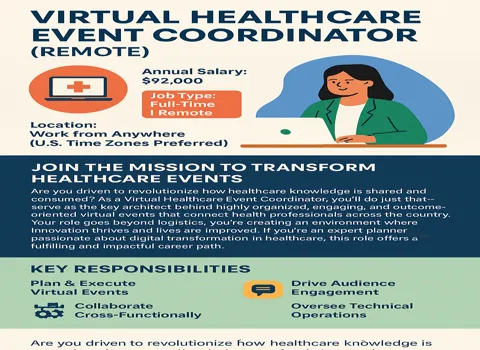
Virtual Healthcare Event Coordinator (Remote)
A Fresh Beginning
Picture this—you’ve got a fresh cup of coffee on the desk, emails pinging in, and in between sips you’re helping shape the future of healthcare events, all without stepping outside your home office. That’s what makes this role special—you’re not just managing events, you’re shaping real connections as a
Virtual Healthcare Event Coordinator. Sure, there are schedules and checklists. But the real heartbeat of this job is bringing doctors, nurses, innovators—even patients—into the same digital space and making it feel real.
Why a Virtual Healthcare Event Coordinator Role Matters
Healthcare is changing fast, and so is the way professionals meet, learn, and share ideas. Gone are the days when everyone needed to fly across the country for a seminar. Now,
online medical conference planning brings those same conversations right to their screens. Imagine organizing a
virtual health summit coordination where thousands of people log in from different corners of the world. It’s your planning that sets off the ripple—suddenly thousands of people are logged in, talking, learning, connecting, and it all traces back to the work you did behind the scenes.
What You’ll Do Day to Day
Most mornings kick off the same way—you log into the event dashboard, run through schedules, poke at the platform to make sure nothing’s broken, and then dive into the day. Midday, you could be jumping into a team huddle to review updates on
remote healthcare symposiums. By the afternoon, you might be in direct contact with guest experts, working through
remote speaker coordination to ensure they’re prepped and ready.
Some mornings it’s the tiny stuff—making sure the registration link actually works so nobody’s stuck hitting refresh five times. Other days, you’ll brainstorm creative ways to use
online attendee engagement strategies—polls, breakout rooms, or interactive games that keep people excited. You’ll also dive into
virtual event production, making sure transitions, visuals, and audio feel seamless.
A Glimpse at the Tools
You won’t be doing this with sticky notes and emails alone. Our team leans on innovative
healthcare event technology platforms that keep everything in sync. Whether it’s dashboards for
virtual exhibition management or trackers for
online event scheduling and reporting, you’ll have modern tools to back you up. We also explore
healthcare conference solutions that give attendees a smoother, more interactive experience. Once you’ve pulled off a full online conference and seen how seamless it runs, trust me—you won’t miss the old way.
The Human Side
Remote work can feel lonely sometimes. We get that. Every Thursday, we hop on a quick video call—half updates, half just sharing weekend plans. You’ll share stories, laugh about small wins, and even troubleshoot tricky situations together. Like the time a keynote speaker’s mic cut out mid-
virtual medical webinar setup—the team jumped in, problem solved, and still got glowing feedback from attendees.
Challenges in Virtual Healthcare Event Coordination
And yeah, sometimes speakers back out at the last minute or a platform freezes right when you don’t want it to. Annoying? Absolutely. But honestly, that’s also the part that makes the work less boring—you’ve always got a puzzle to solve. Think of it like hosting a party where everyone’s invited, but online. Some days it takes patience, other days it’s just caffeine, a muttered swear, and hitting reset—but either way, you’ll roll with it. And when it all comes together—when hundreds join a
telehealth workshop organization without a hitch—you’ll feel that energy, even from behind your screen.
Career Growth in Digital Healthcare Event Planning
You won’t just stay in the background. Your work will directly influence how healthcare experts keep up with innovations. Many events qualify as
continuing medical education (CME) events, meaning your planning contributes to actual professional growth. Some will even allow attendees to earn
digital CME credits, giving your work an even bigger impact. Over time, you’ll get the chance to lead larger projects, test new tools, and maybe even redesign how we think about global healthcare gatherings.
Collaboration in Action
You’ll rarely work alone. One moment you’re syncing with marketing on
digital marketing for healthcare events campaigns. Another, you’re helping presenters polish their slides. You’ll also handle
healthcare stakeholder communication, making sure sponsors, speakers, and attendees all feel connected. At its core, this role is about relationships—building trust and keeping conversations flowing.
Defining Success in Online Healthcare Events
Success isn’t just a smooth schedule or a tech run with zero hiccups. It’s when someone emails after saying, “Hey, that session really helped me,” or when a nurse in a small-town clinic gets CME credits because of your work. Those are the moments that stick—the kind you tell a teammate about the next day while you’re laughing over how chaotic it looked in the moment.
Skills That Shine Here
- Strong organization: juggling schedules, speakers, and attendees isn’t easy.
- Tech comfort: navigating platforms and fixing small hiccups quickly.
- Communication: clear, friendly, and always professional.
- Creativity: fresh ideas for engagement keep people coming back.
- Flexibility: events rarely go 100% as planned, and that’s okay.
How Your Day Might Flow
- Morning: Review online event scheduling and reporting dashboards, respond to urgent emails.
- Late Morning: Prep a run-through with a keynote speaker.
- Afternoon: Brainstorm engagement ideas with the team (polls, quizzes, live chats).
- Evening: Wrap up by logging metrics from today’s remote healthcare symposiums and prepping notes for tomorrow.
No two days look exactly the same, which keeps it fresh. Some days are calm, others are full of action. That variety keeps the role interesting.
Your Background
You don’t need to check every single box to thrive here. But it helps if you’ve:
- Coordinated events before (online or in-person).
- Used platforms for webinars, conferences, or summits.
- Managed groups of speakers or presenters.
- Worked remotely with distributed teams.
Even if you haven’t done all these things, curiosity and adaptability go a long way. If you’re someone who loves to learn and isn’t afraid to experiment, you’ll fit right in.
Salary and Benefits
We know pay matters. This role comes with an annual salary of
$93,000. Along with that, you’ll enjoy:
- Flexible hours designed around your life.
- Remote-friendly perks and home office support.
- Professional development opportunities.
- Access to healthcare-related training and events.
- Team connection activities to keep things personal.
We value balance—because when you’re at your best, so is your work.
Our Culture in a Nutshell
We’re not just about getting things done; we’re about enjoying the process. Wins are celebrated—big and small. Feedback is open and honest. And new ideas? Always welcome. Remote doesn’t mean you’re sitting in silence—it’s freedom, sure, but also knowing the team’s got your back when things go sideways.
The Future You’ll Help Build
Healthcare is increasingly turning to digital spaces every day. The events you coordinate won’t just be about today—they’ll shape the conversations of tomorrow. You end up being the bridge—pulling experts together, shining a light on breakthroughs, and opening the door for people who would’ve been left out before. You’ll even see how
remote patient engagement events open doors for communities that were once left out of these conversations.
Ready to Jump In?
So, are you ready to step into the role of a
Virtual Healthcare Event Coordinator? Here, your work won’t just be about logistics—it’ll be about impact. Every event you manage helps someone learn, grow, or even save lives down the line. That’s not just a job. That’s the purpose.
Final Note
If you’ve been waiting for a chance to merge your skills in organization, communication, and creativity with meaningful work, this is it. Working remote doesn’t mean you’re cut off—it just means you connect in different ways, and honestly, sometimes those connections feel stronger. In the end, that’s really the goal: events people actually want to log into. Not just more events, but better ones—the kind that leave people glad they showed up.