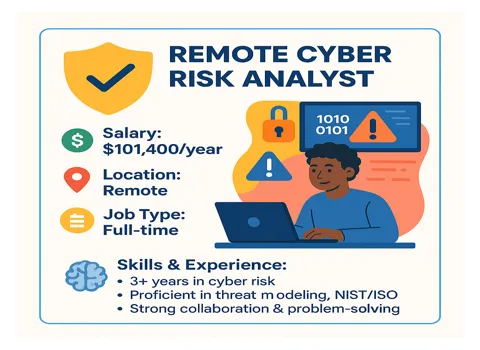
Remote Cyber Risk Analyst
A Role That Actually Matters
Let’s be real for a second—cyber threats aren’t slowing down. Every week, there’s a headline about another breach, another leak, another system taken down. That’s where you come in. As a
Remote Cyber Risk Analyst, you’ll be the one identifying cyber risks early and steering companies away from costly disasters. You’ll help shape the way organizations protect what matters most: data, trust, and people. And yes, you’ll be doing it all from the comfort of your home.
We know remote work can feel a bit isolating sometimes, right? That’s why we keep it human. Weekly team huddles, quick Slack check-ins, and virtual coffee breaks mean you’re never just a name on a screen. Here, you’re part of a team that celebrates wins—whether it’s catching a phishing attempt before it spreads or pulling off a seamless
cybersecurity risk assessment under pressure.
Oh, and let’s not bury the lede: this role comes with an annual salary of
$102,400. Fair pay for meaningful work.
Why This Cyber Risk Analyst Role Stands Out
This isn’t one of those jobs where you get stuck ticking boxes or stuck in endless meetings. Here, you’ll actually shape the way organizations defend themselves. Some days, you might be deep into
threat intelligence monitoring, spotting strange patterns before they snowball. Other times, you could be reviewing
information security policies and showing teams how to put them into action in plain English, not dense legal talk.
We’ve seen firsthand how small details matter. Like the time Sarah, one of our analysts, spotted a weird login at 2 a.m. from halfway across the globe. It turned out to be the start of a brute force attack. Because she raised the flag, the company locked down fast and saved thousands. Those little “aha” moments? That’s the everyday impact you’ll make.
Remote Cyber Risk Analyst Responsibilities
Let’s skip the fluff and get into the real stuff. Your day-to-day will blend investigation, prevention, and problem-solving. These are the
cyber risk analyst responsibilities that will keep you engaged:
Spotting Weak Spots
Sometimes it’s as simple as diving into
vulnerability management systems—scanning, prioritizing, and making sure those patches don’t sit forgotten in someone’s inbox. Think of it like fixing the leaky pipes before the flood.
Planning for the “What Ifs”
Instead of guessing, you’ll help shape
incident response planning. That means mapping out who does what when things go sideways, so when it happens (because it always does), nobody panics.
Staying Compliant Without the Headaches
When the dust settles, compliance still matters. You’ll translate
regulatory compliance frameworks into plain tasks teams can follow. GDPR, HIPAA, SOC 2—yeah, they’re complex. But you’ll be the bridge that makes it manageable (and honestly, less painful).
Protecting the Cloud
A lot of our data now lives in the cloud so that
cloud security assessment will be a big part of your work. Sometimes the fix is as basic as locking a wide-open bucket—and yes, it happens more often than you’d think.
Partnering With Red Teams
Other times, you might find yourself working closely with ethical hackers. You’ll provide
penetration testing support, helping them test the walls so you can patch the cracks.
Impact You’ll Have as a Cyber Risk Analyst
Think of yourself as part detective, part strategist. Your job isn’t just to flag risks but to shape more innovative
data protection strategies. That could mean setting up stronger
identity and access management systems or fine-tuning alerts in SOC dashboards so the noise doesn’t drown out real threats.
One of the biggest headaches for teams today? Alert fatigue. You’ll help tune
SOC and SIEM analysis so folks don’t miss the needle in the haystack. And when it comes to scams, you’ll be a big part of
phishing attack prevention—training teams, building awareness, and making sure people don’t click “that” link.
All of this ties back to
enterprise risk management and broader
cyber risk management. In the moments that matter most, you’re not just protecting servers—you’re helping safeguard reputations, relationships, and livelihoods.
Mindset & Tools for Cyber Risk Management Success
This isn’t about memorizing acronyms. It’s about mindset. Curiosity helps you dig deeper. Persistence keeps you running scans when everyone else has moved on. Empathy lets you explain risks without scaring people.
You’ll lean on frameworks, sure, but you’ll also lean on people. That means working across teams, from IT engineers to execs, helping them understand how
IT governance standards connect with real-world operations. When things get messy, you won’t just shrug and say, “Not my problem.” You’ll roll up your sleeves and help with
cybersecurity risk mitigation.
And don’t worry—you won’t be doing it alone. We’ve built a culture where people share knowledge, swap war stories, and help each other level up because cybersecurity isn’t a solo sport.
A Glimpse Into Your Week
Want to know how this might play out in real life? Picture this:
- Monday morning: You’re analyzing a sudden spike in traffic on a client’s server. It could be normal growth, or it could be a DDoS attempt. You dig in.
- Tuesday: You’re reviewing a new vendor’s system and doing a quick cloud security assessment. Turns out, their storage buckets were public. You flag it, they fix it, crisis avoided.
- Wednesday: Training day. You run a phishing simulation with one of our partners, and only 2% fall for the fake link—a huge win compared to last quarter.
- Thursday: A red team drops its report. You jump in to provide penetration testing support, prioritizing the most urgent fixes… because let’s face it, nobody enjoys compliance checklists dragging on forever.
- Friday: Weekly wrap-up with the team. Wins shared, lessons learned, and maybe even some memes swapped to end the week on a lighter note.
Who Thrives as a Remote Cyber Risk Analyst
This role isn’t for someone who wants to coast. It’s for the kind of person who gets a little spark of excitement when they see a suspicious log entry. Someone who doesn’t mind explaining complex
information security policies in a way a non-technical manager can actually understand. And someone cool with working remotely but still values connection.
You’ll thrive if you:
- Like solving puzzles and cracking mysteries.
- Stay calm under pressure (alerts can feel overwhelming).
- Enjoy turning complex reports into clear next steps.
- Believe security isn’t just about tech—it’s about people.
Skills That Help You Shine
You don’t need to check every single box, but here are things that’ll set you up for success:
- Experience with cybersecurity risk assessment and audits.
- Familiarity with vulnerability management systems and patching workflows.
- Knowledge of SOC and SIEM analysis tools.
- Comfort navigating regulatory compliance frameworks.
- Solid grasp of incident response planning.
- Understanding of identity and access management solutions.
- Exposure to enterprise risk management approaches.
- Hands-on involvement with penetration testing support.
- Strong communicator who can translate tech into plain talk.
And since you’ll be remote, being self-motivated and organized is key. Nobody’s standing over your shoulder, so you’ll own your time.
The Challenges Nobody Tells You About
Let’s be upfront: this isn’t all smooth sailing. You’ll deal with:
- Endless alerts that sometimes feel like false alarms.
- People who don’t follow information security policies, no matter how many reminders you give.
- Tight deadlines when a client suddenly needs a cybersecurity risk assessment yesterday.
- Moments when you question if you’re making a difference.
And yeah—it might not always feel like it, but you are. Every leak stopped, every scam blocked, every manager who finally “gets it”—that’s you shaping a safer digital world.
Growth & Learning
Cybersecurity changes daily. What works today might be useless tomorrow. That’s why we back continuous learning. Certifications, courses, conferences—you’ll get support to keep your skills sharp. And since you’re remote, you’re not tied to one city or office. You can build your career while still living where you want.
The Work Culture
Remember when we said remote doesn’t mean alone? We mean it. Expect:
- Weekly sync calls that are more about collaboration than status updates.
- Slack channels are buzzing with quick questions, random memes, and shared insights.
- Recognition for wins, big and small.
- A team that knows balance matters. Log off when the day ends—we respect boundaries.
We don’t believe in burning people out. Long hours and stress don’t equal success. Innovative strategies and healthy teamwork do.
What Success Looks Like Here
It’s not about chasing perfection. It’s about progress. Success might look like:
- Catching vulnerabilities before attackers do.
- Helping a client pass an audit with zero major issues.
- Rolling out better phishing attack prevention training that actually sticks.
- Tuning alerts so teams respond faster.
- Writing clear data protection strategies that non-tech folks can follow.
Ready to Step In?
So here’s the question: are you ready to take on work that genuinely matters? As a
Remote Cyber Risk Analyst, your efforts will ripple across systems, teams, and industries. You won’t just guard against hacks—you’ll help people feel safer in a world that can feel unpredictable.
Truth is, this isn’t just another
remote cybersecurity job. If you’ve been waiting for a role where remote doesn’t mean disconnected, where your ideas matter, and where your work makes a visible difference, this is it. Let’s make cybersecurity smarter, simpler, and stronger—together.
Because when it really counts, this isn’t just another role. It’s a chance to step up, protect what matters, and build a safer digital future.