🚀 Top Remote Work Skills Employers Look for in 2025

🌟 Introduction: The Future of Work Is Skill-Driven
Remote work is no longer just a perk—it's the new normal. As companies embrace hybrid and fully remote models in 2025, the expectations from remote professionals have evolved. Employers are not just seeking technical know-how; they are prioritizing a unique blend of digital, communication, and self-management skills.
If you are exploring remote work opportunities for freshers, considering work-from-home careers, or want to stay ahead in the remote job market, developing these critical skills will significantly enhance your career prospects.
🎯 Why Remote Work Skills Matter More Than Ever
📈 Rapid Digital Transformation
With the acceleration of digital tools, cloud systems, and AI technologies, companies need employees who can navigate tech ecosystems with ease.
🌍 Borderless Workforce
Remote work has eliminated geographical restrictions. Competition is now global. To stand out, mastering critical remote skills is no longer optional—it's essential.
📊 Changing Employer Expectations
Today's remote employers seek more than task completion; they want proactive contributors who drive innovation and maintain productivity without constant supervision. Professionals who demonstrate flexibility and a growth mindset consistently rank higher in hiring decisions.
🛠️ Top Skills Employers Want in Remote Workers in 2025
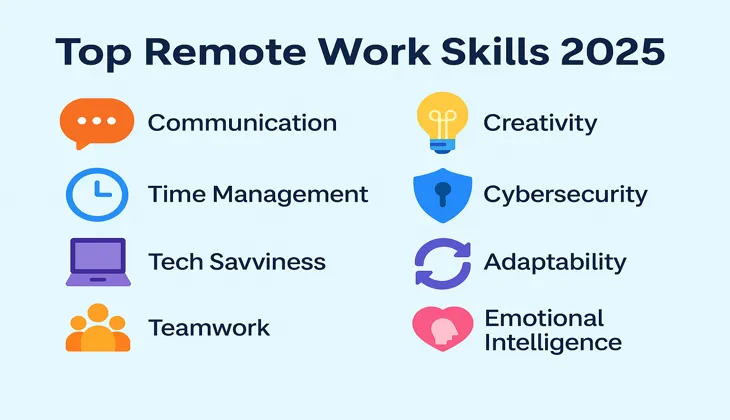
🗣️ 1. Strong Communication Skills
Clear and concise communication is the backbone of remote collaboration.
- Master written communication through emails, chats, and collaborative documents.
- Build excellent verbal skills for video meetings and conference calls.
- Be proactive in updating, sharing status, and maintaining feedback loops.
Long-tail keyword integration tip: Many job listings for remote communication specialist roles emphasize this as the top requirement.
⏰ 2. Time Management and Self-Discipline
When working remotely, no one micromanages your schedule. You need to:
- Prioritize tasks effectively
- Meet deadlines independently
- Balance work and personal life boundaries
Employers favor candidates who demonstrate autonomy and personal responsibility in remote work settings, particularly in productivity skills.
🖥️ 3. Digital Literacy and Tech-Savviness
Knowing basic digital tools is no longer enough. You must:
- Navigate project management tools like Asana, Trello, or Monday.com
- Collaborate through Slack, Zoom, or Microsoft Teams
- Understand the basics of cybersecurity to keep data secure
Tech-savvy employees have a better chance of scoring roles through remote job platforms for beginners.
🤝 4. Collaboration and Teamwork
Successful remote teams thrive on collaboration, even when miles apart. Enhance your ability to:
- Work asynchronously
- Respect diverse perspectives and time zones
- Use shared platforms effectively (like Google Workspace or Miro)
A collaborative mindset ensures smooth workflows, fostering greater efficiency in global teams.
🎯 5. Self-Motivation and Accountability
Remote roles demand high levels of self-motivation. Employers look for professionals who:
- Set personal goals aligned with company objectives
- Take ownership of projects
- Reflect a "solution-first" mindset
Tip: Highlight these traits in your resume to align with high-paying remote jobs in 2025.
🧠 6. Critical Thinking and Problem-Solving
Remote work often requires quick decision-making without face-to-face discussions. Critical skills include:
- Analyzing situations independently
- Offering actionable solutions
- Adapting quickly to unexpected challenges
Employers often mention "problem-solving" as a must-have in remote work job descriptions.
🎨 7. Creativity and Innovation
In a competitive, digital-first world, thinking outside the box is a premium skill.
- Propose creative solutions during virtual meetings
- Innovate better ways to communicate and collaborate remotely
- Help create digital-first strategies for brand growth
Creativity significantly boosts your profile when targeting remote freelance gigs or content-related roles.
🛡️ 8. Cybersecurity Awareness
Remote workers handle sensitive data outside traditional office firewalls. It’s critical to:
- Recognize phishing attempts
- Understand secure remote connections (VPNs)
- Follow best practices for device security
Cybersecurity literacy is becoming a primary checkbox in remote job requirements for freshers, too.
🎓 9. Continuous Learning and Adaptability
Industries are evolving rapidly. Companies seek professionals who:
- Stay updated with the latest tools and trends
- Learn new skills independently
- Embrace change with resilience
Popular certifications that boost your remote career prospects include:
- Remote Project Management (PMP Remote)
- Digital Marketing Certifications (Google, HubSpot)
- Remote IT Support Credentials (CompTIA)
Remaining committed to ongoing education and skill development ensures you stay competitive in a changing job landscape.
💬 10. Emotional Intelligence (EQ)
Working remotely demands empathy and emotional connection across digital platforms.
- Read between the lines in digital communications
- Manage your emotions during stressful situations
- Build strong virtual relationships
Emotional intelligence helps build better virtual teams and is often valued as highly as technical expertise.
🌟 Bonus: Remote-Specific Skills Gaining Popularity
- Virtual Presentation Skills: Hosting webinars and remote workshops
- Online Collaboration Tools Mastery: Proficiency in tools like Mural, Miro, Loom
- Remote Onboarding and Training Skills: Ability to self-onboard quickly and assist others remotely
- Cross-Cultural Communication: Working seamlessly with multicultural teams
Long-tail keyword tip: Many top job platforms now list these under "best remote jobs for beginners with training" options.
🚀 How to Showcase These Skills in Your Remote Job Applications
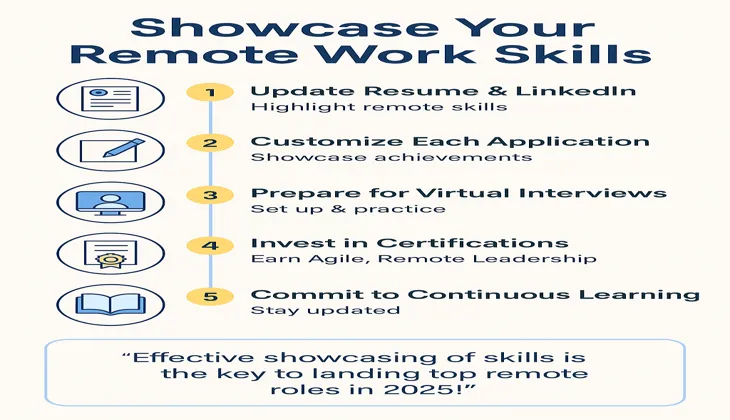
📋 Update Your Resume and LinkedIn
- Create a "Remote Skills" section in your resume
- Highlight projects that demonstrate remote work capabilities
📝 Customize Every Application
- Mention remote-specific skills in your cover letter
- Tailor examples based on the job description
🎥 Prepare for Virtual Interviews
- Ensure a professional setup (lighting, microphone, background)
- Practice behavioral questions highlighting remote work scenarios
Use keywords naturally while answering questions about teamwork, communication, and independence.
📚 Invest in Skill-Based Certifications
Enrolling in short-term certifications not only strengthens your skills but also enhances your profile. Explore online courses that specialize in:
- Remote leadership
- Agile project management
- Remote customer support excellence
Certifications often tip the scales when employers are deciding between equally qualified candidates.
🎯 Conclusion: Future-Proof Your Remote Career
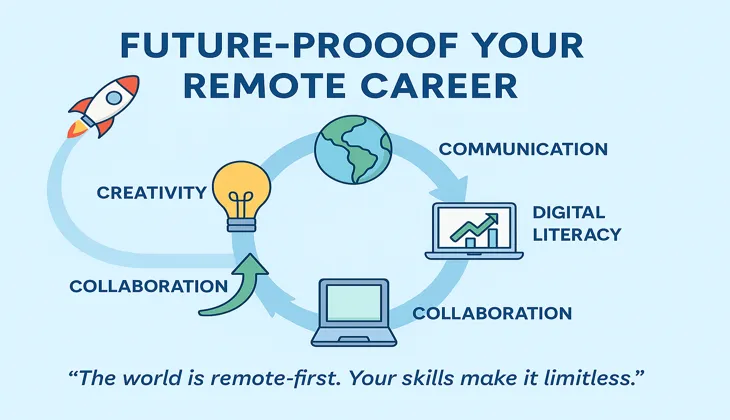
Mastering these remote work skills for 2025 will give you a massive competitive advantage. Whether you’re applying for entry-level remote jobs, aiming for remote project management roles, or building a remote freelance career, these skills are the bridge between today’s opportunities and tomorrow’s success.
Start upgrading your capabilities today, refine your strategy, and unlock exciting new opportunities in the fast-growing world of remote work!

Yogesh Kumar Dewangan is the founder of RemoteRoles, Naukri Mitra and DevMixa. He works across IT, digital marketing, SEO and content writing, and has hands-on experience in recruitment and hiring. Through DevMixa he also trains students and working professionals in IT and digital marketing skills.