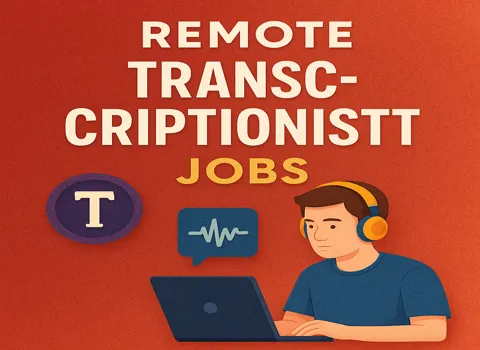
Remote Transcriptionist (Late Shift)
About This Job
Late at night, when most inboxes go quiet, a different kind of work begins. Conversations recorded throughout the day—client calls, interviews, internal discussions—are waiting to be turned into something useful. Not just words on a page, but clear, structured records people can rely on.
That’s where this role fits in. It’s not loud or visible work, but it matters. A well-prepared transcript can save a team from confusion, help a manager make a faster decision, or allow someone to revisit a conversation without replaying an entire recording.
Why This Position Exists
Teams move quickly, and information gets lost just as fast. Audio recordings are helpful, but they aren’t always practical when time is tight. Written transcripts solve that problem.
This role exists to bridge that gap—especially across time zones. While one team signs off for the day, another prepares to pick things up. Having accurate transcripts ready by morning keeps that handoff smooth. No delays, no guesswork.
In many cases, these documents become reference points. They’re used in planning meetings, shared with stakeholders, or stored for compliance. Accuracy isn’t just preferred—it’s expected.
Typical Work Tasks
Each shift begins with a queue of audio files. Some are short and straightforward. Others take more time—such as multiple speakers, uneven audio, or fast-paced discussions.
The process itself is simple on the surface: listen, type, refine. But doing it well requires more than that. You’ll pause, rewind, and replay sections to make sure nothing is missed. You’ll decide how to structure sentences so the meaning stays clear. You’ll catch small errors that could change the tone or intent of what was said.
Some transcripts need timestamps. Others follow specific formatting rules. Over time, you’ll start recognizing patterns—certain clients, recurring topics, familiar speech styles—which makes the work more efficient.
Deadlines are steady but manageable. The key is consistency. Delivering clean, accurate work on time matters more than rushing through a volume of work.
Skill Requirements
Strong listening skills are non-negotiable. Not just hearing words, but understanding them in context. Accents, pacing, background noise—these all come into play.
Written English needs to be solid. Grammar, punctuation, and sentence flow should feel natural, not forced. A reader shouldn’t have to work to understand the transcript.
Typing speed helps, but precision matters more. Catching a small mistake early saves time later.
You’ll also need a level of focus that holds up over long stretches. This isn’t a role with constant task switching—it’s about staying with one piece of work until it’s done properly.
Work Setup
This is a remote role, designed for people who work best without distractions. Late-shift hours mean fewer interruptions, which can actually make it easier to concentrate.
There’s no office noise, no commute, no unnecessary meetings. Just a clear set of tasks and the space to complete them.
That said, independence is important. There won’t always be someone available in real time to answer questions. Being able to figure things out, stay organized, and keep moving forward makes a difference.
Tools Required
The tools are straightforward, but using them well improves speed and accuracy. Most of the work happens in transcription software or standard word processors like Google Docs or Microsoft Word.
Audio playback tools allow you to slow things down, repeat sections, or skip ahead easily. Some people use keyboard shortcuts or foot pedals to move through recordings more quickly without losing focus.
Good headphones are essential. Clear audio makes everything easier—especially when dealing with low-quality recordings or overlapping voices.
How Work Happens
A file comes in late in the evening—a recorded discussion between a client and a project team. The conversation moves quickly, with ideas bouncing back and forth and a few technical terms mixed in.
You start by listening through once, just to get a sense of the flow. Then you go back and begin transcribing, breaking the conversation into clear sections, identifying speakers, and smoothing out the language where needed.
By the time you’re done, the recording has been turned into a document that’s easy to scan and understand. The next morning, the team doesn’t need to revisit the audio. They have what they need right in front of them—decisions, key points, next steps.
That’s the difference this role makes.
Suitable Profile
This kind of work suits people who don’t mind working quietly and independently. If you prefer focused tasks over constant interaction, it’s a good fit.
It also works well for those who are naturally detail-oriented. The kind of person who notices when something feels slightly off—and takes the time to fix it.
Late hours aren’t for everyone, but for the right person, they offer a level of calm that’s hard to find during the day.
Take the Next Step
If you’re looking for steady, meaningful work that values accuracy over noise, this role is worth considering. It won’t put you in the spotlight—but it will put you at the center of how information moves.
Apply when you’re ready. The work is straightforward, the expectations are clear, and the impact—while subtle—is real.