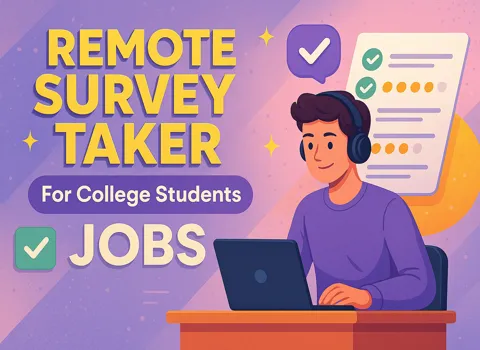
Remote Insight & Feedback Role for College Students
There’s a quiet shift happening behind the apps people use every day and the services they rely on without thinking twice. Before anything reaches the public, it often passes through ordinary voices—students, users, and everyday individuals who simply share what feels right or confusing. This remote role exists inside that space. It turns simple opinions into meaningful direction for companies, refining how their products actually work in real life.
Instead of structured office routines or complex technical tasks, the work here is built around attention, honesty, and lived experience. A student using a product in the morning or browsing an app at night might not realize it, but their perspective can directly influence what millions of others will later see in a finished version.
Job Snapshot
The role involves participating in online surveys and brief research activities designed to capture real user opinions. These surveys may explore anything from digital habits and mobile app usability to preferences in products, services, or online experiences.
Everything is fully remote and shaped for flexibility. There are no fixed shifts or location limits, which makes it especially suitable for college students balancing lectures, assignments, and personal time. The earning potential can reach up to $64,800 per year, depending on consistency and participation levels.
Rather than feeling like traditional work, it resembles a steady flow of short, purposeful interactions that fit naturally into daily routines.
Why This Role Feels Meaningful
Behind every improved product interface or simplified feature, there is usually feedback that pointed someone in the right direction. This role is part of that invisible process.
When a group of students reports that a mobile app feels easy to navigate, that insight validates design choices. When they struggle with a confusing layout, it signals where adjustments are needed. These small reactions quietly shape decisions that affect how digital tools evolve before reaching wider audiences.
The impact is subtle but real—turning personal experience into something that improves usability for others who will never know the feedback process even existed.
How the Work Unfolds Day to Day
There is no fixed pattern to follow, but there is a rhythm to participation. A student logs into a secure survey platform, checks available studies, and chooses ones that fit their time.
Some sessions take only a few minutes—quick opinion polls or preference checks. Others might involve testing a website or reviewing a digital experience in more detail. The questions are usually straightforward, but they rely on thoughtful responses rather than rushed clicks.
For example, a survey might ask how intuitive a checkout process feels or whether a new feature is helpful in daily use. The value comes from real reactions, not rehearsed answers.
What Makes Someone Successful Here
There is no requirement for prior professional experience or technical background. What matters more is how carefully someone engages with what they see.
Being able to read instructions clearly, notice small differences, and respond honestly makes a real difference in the quality of insights collected. Since most tasks involve online forms and digital questionnaires, basic comfort with devices such as laptops or smartphones is sufficient.
Consistency also plays a quiet but important role. Regular participation helps maintain reliable data flow for research teams working behind the scenes.
How the Setup Feels in Practice
The structure is intentionally light. There are no office hours or daily reporting systems. Students choose when to participate based on their availability.
One day might involve completing a single short survey between classes. Another might include a longer feedback session during a free evening. This flexibility is what makes the role blend so naturally into student life.
Everything happens remotely, so participation can take place from a hostel room, library corner, or even a quiet café—anywhere with stable internet access.
Platforms That Keep Everything Connected
Work is conducted through digital research platforms designed to simplify participation. These systems host surveys, track progress, and organize available studies in one place.
Most interfaces are straightforward: login, select a survey, complete it, and submit responses. Some platforms may include dashboards that show completed tasks and new opportunities as they become available.
No advanced technical skills are required—just basic navigation and familiarity with online forms.
A Real Situation From the Work
Picture a company preparing to release a new student-focused budgeting app. Before launch, they invite remote participants to test it and share honest feedback.
A student in this role opens the app and begins exploring its features. They notice that tracking expenses is simple, but finding monthly summaries takes extra steps. In the survey that follows, they clearly mention this experience.
When multiple participants highlight similar points, developers adjust the interface to make navigation smoother. What started as a short session quietly contributes to a better product experience for future users managing their finances.
Who This Role Naturally Suits
This opportunity fits students who are comfortable expressing opinions and paying attention to everyday digital experiences. It works well for those who enjoy observing how apps and services function rather than just using them casually.
It also suits individuals seeking flexible remote participation that doesn’t conflict with academic schedules. Since the work is self-paced, it adapts easily to different routines.
There is no need for specialized training—just a willingness to engage sincerely and consistently with each task.
Getting Started
Starting is simple. After a short onboarding process, participants receive access to survey platforms and available studies. From there, they can begin selecting tasks based on interest and availability.
Over time, consistent participation can lead to access to a wider range of research activities, including more detailed studies.
What begins as simple survey participation often grows into a steady and flexible way to contribute to real product development decisions while maintaining full control over personal time.