
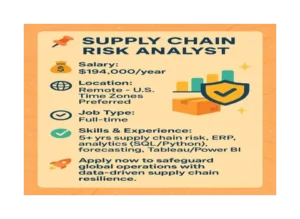
Remote Supply Chain Risk Analyst
Annual Salary: $195,000
Location: Remote – Work from anywhere in the U.S.
Why This Role Feels Different
Let’s be real—supply chain risk sounds serious (and it is), but here it’s also about solving real-world problems that have a direct impact.
Ever wondered how a single delay at a port in Singapore could cause a retailer in New York to miss a launch? We live in those moments, spotting risks before they ripple out.
This isn’t a job where you sit and shuffle spreadsheets all day. You’ll be part of a team that thrives on fast decisions, smart risk assessments, and keeping things moving when others panic. And yes—it’s fully remote, so your commute is as short as a walk from your coffee machine to your desk.
The Work You’ll Dive Into
Here, you’ll monitor, assess, and manage risks across complex supply chains—sometimes that’s weather patterns disrupting shipping routes, sometimes it’s a geopolitical shift making a supplier suddenly unreliable.
You’ll connect with suppliers, logistics teams, procurement leads, and finance folks—all without leaving your home office.
We lean on real-time data, predictive analytics, and honest human judgment. Some calls you’ll make with software backing you up. Others? It’s pure gut, shaped by experience.
Imagine this:
- It’s Tuesday morning. A storm is about to hit a major shipping lane. You jump into a quick call with logistics, confirm alternate routing, and save a $2M shipment from delay.
- By Wednesday afternoon, a supplier’s factory has a sudden labor strike. You’ve already flagged the backup manufacturer in Vietnam two weeks ago. The transition is smooth.
- On Friday, you close your laptop knowing you’ve kept goods flowing when it could’ve all stopped.
That’s the kind of week we’re talking about.
A Day in This Role
Wondering what your remote day will actually look like? Here’s a snapshot:
- Morning check-in: Quick scan of overnight reports—anything from cargo delays to political unrest. You’ve got alerts set up, so nothing slips by.
- Risk call: Chat with a supplier in Europe about shifting production due to material shortages.
- Data deep dive: Use our dashboards to spot trends before they become problems.
- Cross-team sync: Work with finance to evaluate cost implications of rerouting shipments.
- Wrap-up: Flag any upcoming risks, update the risk tracker, and send a short “Heads Up” note to the team.
Remote work can feel lonely sometimes. Here, we keep it connected with weekly team huddles, virtual coffee breaks, and a Slack channel dedicated to random memes (because honestly, a good laugh fixes a lot).
The Impact You’ll Have
Every decision you make protects revenue, customer trust, and brand reputation. You’re not just tracking numbers—you’re safeguarding the flow of goods that people rely on.
Think about it: without proactive risk management, delays snowball, costs spike, and customers lose faith. You’ll be the reason that doesn’t happen.
We’ll give you the tools, but you’ll bring the curiosity, resilience, and ability to spot trouble before it becomes trouble.
Skills That Make You Stand Out
We’re not just ticking boxes here—these are the skills that actually matter in this role:
- Risk detection radar: You see patterns others miss.
- Data comfort: You’re at home in dashboards, analytics tools, and Excel—but you also know when to trust instinct.
- Clear communication: You can explain risk in plain English to someone who’s never heard of supply chain analytics.
- Calm under pressure: When things heat up, you’re steady, not scrambling.
- Relationship building: Suppliers, logistics partners, and internal teams trust you because you listen first, act second.
Tech & Tools You’ll Use
We don’t drown you in software, but you’ll have a solid stack that keeps things efficient:
- Real-time tracking systems for shipments and supplier performance.
- Predictive analytics tools for spotting risks early.
- Collaboration platforms like Slack, Zoom, and Miro.
- Data visualization tools for turning complex reports into clear insights.
We’ll train you on our specific platforms, but a comfort level with tech is key.
Challenges (And How We Tackle Them)
Let’s not sugarcoat it—risk analysis can be stressful. You’re dealing with unpredictable events: storms, strikes, cyber threats, political changes. It’s a lot.
Here’s how we keep it sustainable:
- Shared load: No one is “the only person” on a risk. We work in pairs or small groups.
- Clear priorities: You’ll always know the top three things to focus on.
- Mental health breaks: Encouraged. Seriously—take them.
- Real flexibility: You manage your schedule, as long as the work gets done.
Growth & Learning
The supply chain world is changing fast—automation, AI, climate impacts. We invest in keeping you ahead:
- Quarterly learning budgets for courses or certifications.
- Access to global industry reports so you’re always in the know.
- Mentorship from senior analysts who’ve been in the trenches.
We want you to grow here, whether that means becoming a senior risk strategist, leading your own team, or moving into broader supply chain leadership.
Culture Snapshot
We’re a remote-first team, but we act like neighbors:
- We celebrate wins in real time (yes, even the small ones).
- We believe no question is too small to ask.
- We share Spotify playlists for different work moods.
- We actually like working together—and that shows in our results.
Your First 90 Days
We want you to hit the ground running, but also feel supported:
Week 1–2:
- Meet the team
- Get familiar with our tools and workflows
- Shadow a few live risk calls
Week 3–6:
- Take ownership of a small risk portfolio
- Start contributing to weekly risk reports
Week 7–12:
- Lead your own risk assessments
- Present findings to leadership
- Suggest improvements to current processes
By the end of your first 90 days, you’ll be fully embedded—trusted to make calls that matter.
What We’re Excited to See in You
- 5+ years in supply chain, risk management, or logistics (remote experience a plus)
- Strong analytical thinking without losing sight of the human side
- Ability to manage multiple priorities without burning out
- A track record of getting things done in high-pressure situations
The Perks
- $195,000 annual salary
- Fully remote setup—work from wherever you feel most productive
- Generous PTO plus mental health days
- Home office stipend
- Annual company retreat (yes, we all actually look forward to it)
Why People Stay Here
We asked our team what keeps them around, and here’s what came up:
- “I feel like my work actually matters.”
- “Even in high-pressure weeks, I never feel alone.”
- “There’s space to try new ideas without fear of failure.”
- “Remote doesn’t mean disconnected here—it’s the opposite.”
Final Word
If you love problem-solving, staying cool when the unexpected hits, and making a real difference in how goods move around the world, this is the kind of role you’ll thrive in.
Every shipment you protect, every delay you prevent—it’s not just numbers on a screen. It’s businesses staying afloat, customers getting what they need, and supply chains that actually work in a messy world.
Ready to step up? Let’s make it happen.