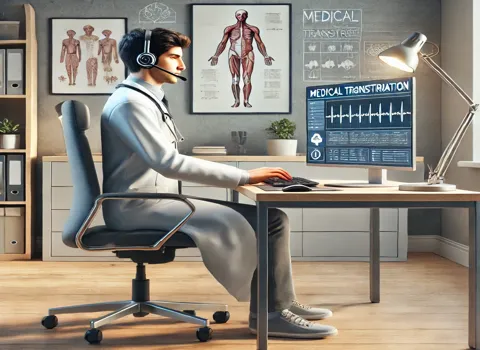
Why a Remote Pathology Transcriptionist Role Truly Matters
Imagine turning raw medical dictations into precise, life-changing information—all from the comfort of your own home. That’s precisely what being a Remote Pathology Transcriptionist is about. You’re not just typing words. You’re making sure every digital pathology report is accurate, clear, and ready to support doctors making critical decisions. And yes, it’s detail-heavy work—but if you’ve got the patience, the curiosity, and the focus, this career can feel deeply rewarding.Sure, remote healthcare jobs have been around for years. But they still carry that sense of fresh possibility—especially in transcription. This is one of those jobs where you can build a serious career while keeping flexibility in your daily life. Think of it as joining the heartbeat of modern medicine—without ever stepping into a lab.
Why Pathology Transcription Accuracy Matters
Truth is, pathology is all about details. A misplaced word or a skipped term in diagnostic report preparation could change the way a case is read. That’s why your eye for detail isn’t just “nice to have,” it’s the core of what makes this role powerful. Patients don’t see your name, but your accuracy plays a role in their diagnosis and care.We’ve seen it firsthand. One of our transcriptionists, Maria, once flagged a slight inconsistency in a pathology dictation transcription. Turns out, it prevented a mix-up that could have delayed a cancer diagnosis. That’s how important these lines of text can be.
Daily Tasks of a Remote Pathology Transcriptionist
So, what’s your day really like? Picture this:
Morning: You log in, check assignments, and grab a set of new pathology audio files. Some are short. Others drag on for minutes. Each one needs sharp listening.
Midday: You’re knee-deep in laboratory documentation accuracy, making sure terms align perfectly with standard clinical terminology expertise.
Afternoon: A quick virtual catch-up with your team—maybe sharing tips or venting about a particularly muffled recording. Then back to polishing every phrase before submitting.
Evening: You wrap up knowing you’ve contributed to secure electronic health records that doctors depend on.
Some files finish fast. Others? You’ll replay three times before catching one tricky word. That’s the job. But every day, you’ll see how your work makes digital pathology reports more reliable for doctors and patients alike.
Essential Tools for Remote Medical Documentation
You’ll use specialized platforms built for remote medical documentation. They’re designed for speed, security, and reliability. Think of them as your virtual lab desk.Everything is HIPAA-compliant transcription work, so no worries about data safety—it’s locked down tight. What you bring is your focus, your precision, and your understanding of medical language.
Key Skills for Pathology Transcription Success
Think you’ve got what it takes? These are the skills that set great transcriptionists apart:
Strong command of medical and pathology vocabulary.
Patience to replay and double-check difficult audio.
Ability to spot inconsistencies and fix them.
Comfort with technology and transcription software.
Commitment to transcription quality assurance.
Honestly? If you’re the type who Googles random medical terms just out of curiosity, you’ll fit right in. Medicine changes. Reports evolve. If you enjoy staying sharp, you’ll thrive here.
Common Challenges in Remote Healthcare Transcription Jobs
No point pretending—it’s tough sometimes. Remote healthcare transcription jobs mean muffled audio, accents that twist your ear, and days when the workload feels endless.But here’s the upside: you improve with every file. You’ll learn to anticipate phrases, to spot typos before they happen, to polish accuracy until it feels second nature. And you’re never really alone—we’ve built a virtual pathology support system with mentors and peer check-ins.
Culture & Team Connection in Pathology Transcription
Remote work can feel isolating. Here’s how we keep it human:
Weekly team huddles where someone’s mic glitches, another shares a Netflix pick, and yes—we still swap transcription tricks.
Recognition when someone nails a month with zero errors.
Celebrating little wins, like finally mastering that shortcut you didn’t know you needed.
Precision matters. But kindness? That’s what keeps people sticking around.
Career Growth in Healthcare Transcription
Let’s be clear—you’re not stuck typing reports forever. With time, you could grow into roles like:
Senior Transcription Reviewer
Pathology Workflow Trainer
Quality Assurance Specialist
Medical Documentation Lead
There’s real room to shape a healthcare transcription career here. If you want to build expertise and move forward, the path is open. And along the way, you’ll see how trusted medical transcription services continue to depend on people like you for accuracy and care.
Pay & Perks
Let’s talk money straight up. The salary for this role is $52,500 annually. No gimmicks, no vague ranges.Here’s what you’ll actually get in this role:
Full remote flexibility (work from wherever you’re most focused).
Training and access to updated resources.
Team support and mentoring.
The quiet pride of knowing your reports help doctors focus on patients.
Real Impact Stories
Jake, one of our team members, once corrected a transcription that clarified a physician’s note for a rare disease. The doctor sent a thank-you. Quiet, but powerful.
Another colleague finished a complex set of dictations on time, helping keep the pathology lab workflow running smoothly.
They might look small on paper. But in healthcare? Those tiny fixes ripple into real lives.
Why You’ll Love It Here
You’ll love this role if you:
Care deeply about precision.
Want flexibility without losing career growth.
Enjoy working quietly but being part of a bigger purpose.
Like the mix of independence and occasional team interaction.
It’s not about glamour. It’s about steady, careful work that saves time for doctors and helps patients get answers faster.
Future of Medical Transcription Services
The world of medicine is moving fast. Medical transcription services are evolving, but the need for human accuracy hasn’t gone away. AI tools are there, sure, but nothing replaces a skilled human ear catching subtle details. You’ll be part of that future—balancing technology with human precision.
How to Succeed From Day One
Here’s a little roadmap:
Week 1: Get comfortable with the transcription software, shadow a senior team member, and complete training modules.
Month 1: Handle shorter files, build your rhythm, ask questions, and keep improving accuracy.
Month 3: You’ll feel settled—taking on complete sets of files and hitting speed and accuracy benchmarks.
Beyond: You’ll shape your growth, whether that means mentoring new hires or exploring more specialized reports.
Your Daily Wins
Even if no one outside the team notices, your wins matter. Every time you nail a tough dictation, every time you double-check a tricky term, every time you push a batch through early—you’re making healthcare run smoother. You’re the unseen hand behind reliable digital pathology reports.
Final Word
If you’ve read this far, you probably see yourself in this role. You like precision. You’re curious. You value flexibility but want your work to make a meaningful impact. That’s exactly the balance you’ll find as a Remote Pathology Transcriptionist.So here’s the deal: steady work, clear impact, fair pay, and room to grow. The real reward comes when you realize every accurate report speeds up treatment. Each file you complete gives doctors more time to do what they do best—care for people. You’ll know your work matters, even if patients never see your name.Ready to step in? The lab is waiting—digitally, of course.
Remote opportunity with global reach — applications are welcome from candidates in any country.