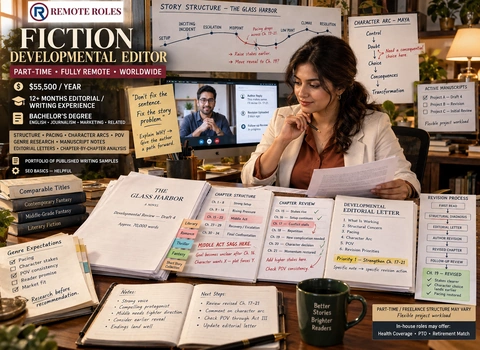
A novel manuscript can have gorgeous sentences and still collapse under the weight of a sagging middle act, and that gap between good writing and good storytelling is where a developmental editor earns their keep. This part-time, fully remote position is built around catching that kind of structural trouble before a book ever reaches a copyeditor or a reader.
Developmental editing sits upstream of line editing and proofreading. Instead of fixing commas or tightening individual sentences, the work is about pacing, character arcs, point of view, and whether the plot actually holds together across tens of thousands of words. Some days that means reading a full manuscript start to finish and writing a long editorial letter. Other days it is a quick pass on a revised chapter to check whether a fix actually solved the problem it was meant to solve, and whether the next scene still lands the way the author intended.
Advertisement
What the work looks like day to day
Most projects start with research, not red ink. Before forming an opinion on a manuscript, you will look into genre conventions, comparable published titles, and what the intended readership for that particular book expects from pacing and structure. From there the work becomes more hands-on and more collaborative. A middle-grade fantasy manuscript gets read very differently from a literary short story collection, and the notes you write have to reflect that instead of applying one generic checklist to everything that lands in your queue.
- Research genre conventions, comparable titles, and reader expectations before forming an editorial opinion on a manuscript
- Draft original editorial content, including manuscript notes, sample revisions, and chapter-by-chapter structural breakdowns
- Revise your own written feedback based on discussion with authors, agents, or acquiring editors so it stays specific and usable
- Adjust pacing, voice, and structure recommendations for the intended audience and platform, whether the book is headed for a traditional publisher or self-publishing
- Coordinate with in-house editors or subject-matter specialists when a manuscript needs outside expertise, such as a historical consultant or a genre specialist
Clients on this kind of work range from independent authors self-publishing their first novel to small presses that do not keep a developmental editor on staff. Each brings a different level of comfort with feedback, so part of the job is calibrating tone as much as content: a debut author often needs more context around why a note matters, while a working novelist on their fifth book usually wants the note itself and nothing more.
Who tends to do well in this role
People who succeed here have usually spent real time inside fiction, not just around it. That might mean former English or journalism majors who kept writing after graduation, freelance editors who have already taken a few manuscripts from first draft to submission-ready, or working writers with a sharp eye for structure in other people's stories. A bachelor's degree in journalism, English, marketing, or a closely related field is expected, along with a portfolio of published writing samples you can point a hiring manager toward.
At least 12 months of hands-on editorial or writing experience is required. Reviewers tend to pay closer attention to how clearly a candidate can explain an editorial choice than to whether they caught every plot hole on a first read, since the ability to justify a note is what actually helps an author revise well. Many people move into this kind of freelance fiction developmental editor work after a stretch of beta reading, content writing, or in-house assistant editing, and that mixed background is common enough that it is not treated as a weakness during hiring.
Skills and tools
- Strong writing and line-level editing ability, backed by a body of work you can share
- Working knowledge of SEO basics, for projects that will eventually live online
- Comfort doing independent research into genre, market, and audience
- Reliability around deadlines, since manuscript timelines rarely move once they are set
None of these need to be fully polished on day one. Experience with content-focused SEO work is genuinely useful, particularly for projects tied to a publisher blog or an author's own platform, but storytelling judgment is what actually gets a candidate hired over someone with a flashier resume. Editors coming from journalism sometimes struggle at first with fiction's looser rules around structure, so a demonstrated interest in novels specifically, not just nonfiction writing, tends to stand out in an application.
Pay and what comes with it
The role pays $55,500 a year on a part-time basis. Remoteroles lists this plainly because a lot of writing and editorial work in this field is freelance or project-based, and that structure usually does not come with a traditional benefits package attached. Where a position like this is set up in-house rather than as a straight freelance contract, it commonly includes:
- Health coverage
- Paid time off
- Retirement plan matching
It is worth asking directly which structure applies before accepting an offer, since freelance and in-house arrangements change what actual take-home compensation looks like across a year, even at the same headline salary. Freelance editors also generally set their own per-project or hourly rate within the scope of an assignment, which gives more control over total earnings than a fixed salary does, at the cost of less predictability month to month.
How the remote side works
This is a fully remote, worldwide position, with no office or specific city tied to it. Most collaboration happens asynchronously, through shared documents, tracked changes, and comment threads rather than scheduled meetings. You will occasionally join a call with an author or an in-house editor to talk through a difficult revision, but there is no fixed block of office hours and no requirement to be based in any particular country or time zone. Part-time scheduling means the workload flexes with how many manuscripts happen to be active at once, which suits people juggling other freelance writing or editing work on the side.
Next steps
If this sounds like a fit, send a portfolio along with a short note on the kinds of fiction you edit best, whether that is literary, romance, thriller, or something else entirely. Applications move on a rolling basis, and candidates who make it to the final round are typically asked to complete a short paid sample edit before an offer goes out.