What Does a Control Room Operator Actually Do?
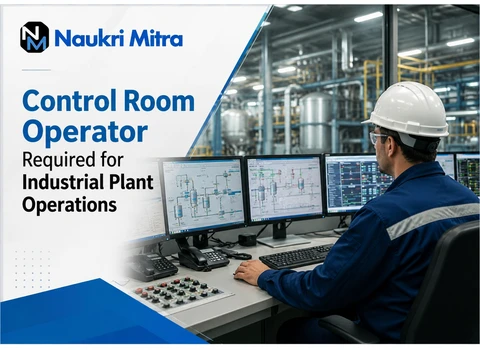
Walk into any large industrial plant, and you'll find one room that never really goes quiet — the control room. This is where a Control Room Operator sits for most of the shift, watching screens and dials rather than standing next to the machines themselves. The job is less about physical labor and more about attention. A furnace running too hot, a pump losing pressure, a line drawing more current than it should — the operator usually spots it here before anyone on the floor does. Right now, a Control Room Operator is required for Industrial Plant Operations in Korba, Chhattisgarh, India, and the position is Full-time.
Why This Job Exists in the First Place
Plants like power stations, cement units, and chemical processing facilities can't afford to stop and start on a whim. Once a boiler is running or a kiln is up to temperature, shutting it down costs time and money. So someone has to keep a close eye on things and catch problems while they're still small. That's basically the reason this role exists. Without a trained person monitoring the panel, a minor pressure spike can cause a shutdown, or worse, damage equipment.
A Shift, Start to Finish
Most days start the same way — checking what happened on the previous shift. Any alarms overnight? Any equipment running outside normal range? From there, the operator settles in to track readings across the panel: temperature here, flow rate there, voltage on another screen. When something needs adjusting, they make the change from the control desk itself, or they radio someone in the field to handle it physically. It's a mix of watching, recording, and talking to people — not a single continuous task but many small ones stacked throughout the shift.
What the Job Actually Involves Day to Day
- Keeping track of temperature, pressure, flow, and voltage readings
- Starting or stopping equipment when the process calls for it
- Writing shift logs and handing over notes to the next operator
- Flagging unusual readings to a supervisor before they become a bigger issue
- Staying in contact with field staff during startup or maintenance work
- Sticking to the standard procedure for each unit, even under pressure
The Kind of Places That Hire for This
Thermal power plants, coal-linked industries, cement units and chemical processing plants are where this role shows up most often. Korba has a fair concentration of power and mineral-based industry, which is exactly the kind of setting where control room positions are needed on an ongoing basis.
The Panel Itself — What's On It
SCADA screens and DCS (distributed control system) displays are the main tools here, backed up by analog gauges where the older equipment hasn't been digitized yet. Alarm panels, intercoms, and handheld radios round out the setup. A lot of the job comes down to reading these instruments correctly and knowing which readings actually matter versus which ones are just noise.
What Separates a Good Operator From an Average One
Technical knowledge of the process matters, obviously. But panel reading alone doesn't make someone good at this job. The operators who do well tend to stay calm when an alarm goes off rather than panic, and they communicate clearly with the field team rather than assuming everyone already knows what's happening. On the qualification side, an ITI in the electrical or instrumentation trades is commonly preferred, and a Diploma in a relevant engineering stream is also acceptable. That said, plants often value someone who's actually spent time near live equipment over someone who's only studied it on paper.
Shifts, Hours, and the Physical Side of It
This isn't a desk job in the usual sense, but it's not physically demanding either. Rotational shifts are standard, including night duty, since most plants run around the clock. The control room is usually air-conditioned and enclosed, so the physical strain is minimal — the real demand is mental. Staying sharp at 3 AM during a quiet stretch of the shift is harder than it sounds.
Safety, and What Gets Worn Where
Inside the control room, safety training focuses on emergency shutdown steps and evacuation routes. The moment an operator steps out to the field — which does happen occasionally — helmet, safety shoes and a reflective jacket go on. Plants take this seriously because the areas just outside the control room are rarely as controlled as the room itself.
Where It Gets Difficult
Multiple alarms firing at once is probably the hardest part of the job — figuring out which one needs attention first. Long night shifts wear people down too, especially the ones where nothing happens for hours and then everything happens at once. Communication gaps with field staff can also slow things down if instructions aren't passed on clearly.
Moving Up From Here
Operators who stick with it and keep learning new systems often move into senior control room roles or shift supervisor positions over time. Some shift toward instrumentation-focused work within the same plant. Growth here tends to come from reliability and familiarity with the systems rather than anything dramatic — showing up, handling shifts well, and picking up new panel systems as plants upgrade them.
Pay and What Else Comes With It
This Full-time role in Korba, Chhattisgarh, India, pays ₹34,000 a month. Beyond the base salary, some employers add overtime pay, PF, ESI coverage, bonuses, uniforms, or transport and canteen facilities — though these vary from one employer to another and shouldn't be assumed as fixed.