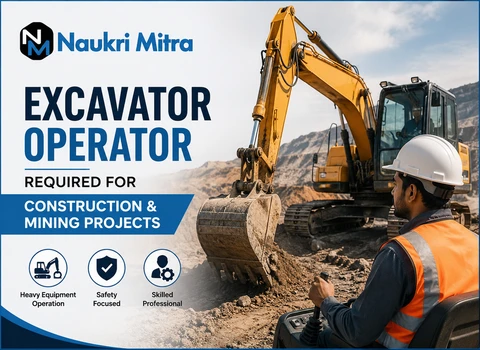
What Does an Excavator Operator Actually Do?
Dig a trench, level a slope, load a truck, clear a mining bench — an excavator operator handles all of it from inside the cabin of a hydraulic excavator. It's one of those jobs that looks simple from the outside but takes real skill to do well. Get the bucket angle wrong or misjudge the swing radius, and you can damage a pipeline, tip material in the wrong spot, or worse, put someone nearby at risk. That's why sites value operators who've put in the hours and know their machine inside out.
Where the Demand for This Role Comes From
No structure gets built and no ore gets moved until the ground is prepared. Every road, building foundation, canal, or open-pit mine starts with earthwork, and that earthwork rarely gets done by hand anymore. Contractors and mining companies look for operators who can move material quickly without wasting fuel or wearing down the machine faster than necessary. A careless operator costs money in repairs and delays; a good one keeps the whole project moving on schedule.
How a Shift Usually Unfolds
Most days start before the engine even turns on. Operators walk around the machine, check the tracks, inspect hydraulic hoses for leaks, inspect the bucket teeth, and top up fluids as needed. Once everything checks out, the real work begins — digging foundations, cutting trenches for pipelines, loading dump trucks with soil or ore, or grading a rough patch of ground until it's level. None of this happens in isolation. Signalers, supervisors, and other machine operators are usually working close by, so constant communication matters as much as the digging itself.
What the Job Involves Day to Day
- Running the excavator's controls to dig, lift, and load with precision
- Reading site plans or taking direction from a supervisor on where and how deep to dig
- Carrying out pre-shift and post-shift checks on the machine
- Keeping safe distances from workers, vehicles, and buried utility lines
- Flagging mechanical problems early instead of pushing the machine until it fails
The Kind of Sites Where This Work Happens
Road-building projects, building foundations, canal and irrigation work, and open-cast mines all rely on this skillset. In Singrauli, Madhya Pradesh, where mining and power-sector construction keep the local economy busy, operators who can handle uneven terrain and long stretches of continuous digging tend to stay in demand.
Equipment Beyond the Excavator Itself
The machine itself is only part of the picture. Depending on what a site needs, operators also work with hydraulic breakers for hard rock, different bucket attachments for grading versus digging, and sometimes auxiliary tools bolted onto the arm. Simple instruments like a spirit level or grade stakes help confirm that depth and slope match what the drawing calls for. And reading the gauges on the control panel — hydraulic pressure, engine temperature, fuel level — is something every operator needs to get comfortable with early on.
What Separates an Average Operator from a Good One
Technical know-how gets you in the door, but judgment is what keeps you employed long-term. Depth perception, smooth hand-eye coordination, and the patience to repeat the same motion hundreds of times without losing focus — these come with time in the seat, not from a textbook. Many people enter this trade through an ITI course in a related field, or by working as a helper on-site before moving up to running the machine on their own.
The Physical Side of the Job
Sitting for long hours in a cabin that vibrates constantly isn't easy on the body, and neither is the dust, heat, or noise that comes with most outdoor sites. Summers can be brutal, and monsoon season brings its own complications with slippery, unstable ground. Shift work is common too — early starts, late finishes, and sometimes night shifts when a project is racing against a deadline.
Staying Safe on the Job
A hard hat, high-visibility vest, safety boots, and hearing protection are the basics almost every site requires. Beyond the gear, operators are trained to watch for blind spots around the machine, keep a safe swing radius when the arm is in motion, and stay clear of trench edges that could give way. During maintenance, following proper lockout steps prevents the machine from moving unexpectedly while someone's working on it.
Challenges That Come with the Territory
Soil conditions change without warning — what looks stable one day can shift after rain. Weather adds another layer of unpredictability, and working in tight spaces alongside other heavy machinery demands constant awareness. Staying sharp through a long, repetitive shift is harder than it sounds, and experienced operators usually manage it through routine and discipline rather than relying on adrenaline.
Where This Career Can Lead
Put in a few years with a clean safety record, and doors start opening — bigger machines, more specialized equipment, or even a move into site supervision. Some experienced operators end up training the next batch of newcomers. It's a trade where reliability and a good track record count for more than paperwork.
Pay and What Else Might Come With It
This is a full-time role based in Singrauli, Madhya Pradesh, India, with a monthly salary of ₹36,000. Some employers also offer extras like overtime pay, PF, ESI coverage, transport, or canteen facilities, though what's included depends entirely on the company, so it's worth confirming these details before accepting an offer.