What Does an Effluent Treatment Plant Operator Actually Do
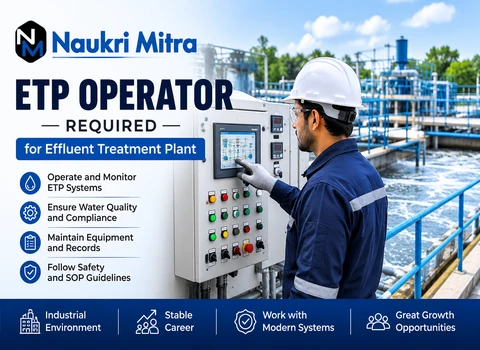
An ETP Operator is the person responsible for running and monitoring the equipment that cleans wastewater before it is released or reused. Almost every chemical, textile, pharmaceutical, and dyeing unit generates liquid waste that cannot be discharged untreated. That is where the operator steps in, managing tanks, pumps, and dosing systems so that the treated water meets the required pollution control standards. This opening is for an ETP Operator position at an effluent treatment plant, a full-time role based in Ankleshwar, Gujarat, India.
Why Factories in Ankleshwar Rely on This Role
Ankleshwar is home to numerous chemical and process industries, and treatment of industrial effluent is not optional here; it is a legal requirement. Companies need dependable operators who can keep the plant running smoothly around the clock, since even a short shutdown can lead to compliance issues or environmental penalties. This makes the plant operator one of the more essential, steady roles inside any manufacturing setup.
A Typical Shift on the Plant Floor
The day usually begins with checking tank levels, pump status, and chemical dosing units from the previous shift. From there, the operator collects samples, records readings such as pH, TSS, COD, and BOD, and adjusts chemical dosing based on those numbers. Backwashing filters, cleaning screens, and maintaining logbooks are also part of the routine. No two days are identical, since the quality of incoming effluent can vary depending on production activity in the factory.
Main Duties Handled Daily
- Operating aeration tanks, clarifiers, and sludge handling units
- Dosing chemicals like alum, lime, or polymer accurately
- Monitoring flow meters, pressure gauges, and control panels
- Coordinating pump and blower maintenance with the mechanical team
- Maintaining treatment records for internal and pollution board audits
Instruments and Equipment You Will Work With
An operator regularly handles equipment such as clarifiers, aeration blowers, filter press units, dosing pumps, and sludge drying beds. Measuring instruments, including pH meters, TDS meters, and DO (dissolved oxygen) meters, are used to check water quality at different stages. Understanding how each machine functions and why a particular stage of treatment is needed helps an operator troubleshoot problems more quickly, rather than just following steps mechanically.
Skills That Set a Good Operator Apart
Technical knowledge of biological and chemical treatment processes matters, but so does attentiveness. A good operator notices small changes, like unusual odor or color in the water, before they become bigger problems. Basic computer skills for logging data, comfort with reading gauges and meters, and the ability to work carefully with chemicals are equally important.
Education and Training Background
Candidates with an ITI qualification in a relevant trade, a diploma in chemical or environmental engineering, or prior hands-on experience in effluent or water treatment plants are generally preferred. Practical exposure to plant operations, dosing calculations, and safety procedures often counts as much as formal education for this kind of technical role.
Physical Requirements and Shift Pattern
The job involves standing, walking around the plant, and occasionally lifting chemical containers or handling sludge. Since treatment plants run continuously, this Full-time role may involve rotational shifts, including night duty, to keep the system monitored at all times.
Working Environment and Safety Culture
Working near tanks, chemicals, and moving machinery means safety cannot be treated casually. Operators are expected to follow standard operating procedures, use PPE such as gloves, safety goggles, gumboots, and masks where needed, and be alert to slippery surfaces or gas exposure near sludge units. Regular safety briefings and proper labeling of chemical containers are common practices in well-run plants.
Challenges Operators Often Face
Sudden changes in incoming effluent load, equipment breakdowns during peak hours, and working in humid or odorous conditions are part of the job. Staying calm, following escalation procedures, and communicating clearly with supervisors helps manage these situations without panic.
Growing Within This Field
With experience, an ETP Operator can move toward senior operator or shift-in-charge positions, eventually taking on responsibility for plant compliance and team supervision. Learning additional treatment technologies, such as membrane systems or advanced biological treatment, adds further value over time.
Salary and Possible Benefits
This position offers a monthly salary of ₹27,000. Depending on the employer, additional benefits such as overtime pay, PF, ESI, bonus, uniforms, or transport and canteen facilities may also be available, though these vary by company.