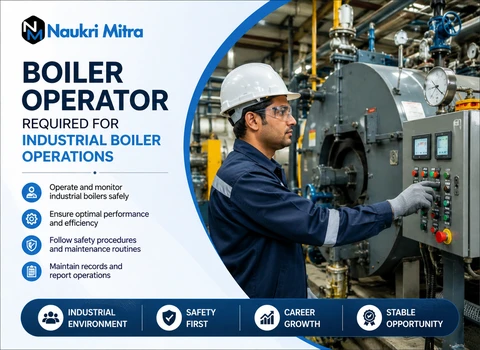
Who Keeps the Steam Running
Every factory that uses steam needs someone watching the boiler that makes it. In Ankleshwar's industrial belt, that person is the boiler operator. The work isn't complicated to describe, but it takes real attention to do well: checking pressure, adjusting fuel, catching problems before they turn into shutdowns or something worse. A lot of the job is judgment built from experience, not something you can fully learn from a manual before your first week on the floor.
Why Employers Take This Role Seriously
Steam shows up in more industrial processes than people realize. Textile units use it for dyeing, pharma plants use it for sterilization, and chemical or food processing units often depend on it for entire stages of production. When a boiler goes down or runs inefficiently, the effects spread fast: wasted fuel, slower output, sometimes a full stop on the line until it's sorted out. There's also the safety angle, which is really the biggest reason companies don't cut corners when hiring for this position. A mishandled boiler is a genuine hazard, and everyone on site knows it.
A Typical Shift
The day usually starts with a walk-around before the equipment is even switched on. Water levels get checked, fuel lines get confirmed, safety valves get a quick look. Once things are running, the operator settles into a rhythm of monitoring and small adjustments, tweaking fuel-to-air ratios, logging readings roughly once an hour, and staying alert for anything that doesn't look or sound right. If a gauge starts acting strange, it gets looked into immediately rather than left for later in the shift.
What the Job Involves
- Starting up and shutting down units following proper procedure
- Monitoring water treatment to avoid scale and corrosion buildup
- Managing fuel supply, whether that's coal, biomass, furnace oil, or gas
- Keeping accurate logs of readings and shift activity
- Carrying out routine checks on pumps, valves, and burners
- Responding quickly when alarms sound or pressure shifts unexpectedly
The Equipment Involved
Operators work regularly with pressure gauges, water level indicators, safety relief valves, feed pumps, and combustion control panels. Some plants use fire-tube boilers, and others use water-tube designs; each behaves a little differently under load, so handling isn't always identical from one plant to the next. Water quality is checked often, too, using TDS and flow meters, since poor water chemistry is one of the more common reasons boilers wear out early. Thermometers are also used regularly, mainly to spot heat-related issues before they require expensive repairs.
What Employers Look For
An ITI qualification in a relevant trade helps candidates stand out, particularly in boiler operation or mechanical maintenance. A valid boiler attendant or operator certificate matters too, since Indian regulations require it for this kind of work. Diploma holders in mechanical engineering also tend to do well, especially at plants running more automated systems where there's more to understand mechanically.
Even with the right paperwork, plants are really hiring for reliability. Someone who reads gauges accurately without second-guessing, stays calm when pressure spikes without warning, and communicates clearly with a supervisor during a tense moment is worth more than someone who just checks the qualification boxes.
Where the Work Happens
This role shows up in industrial plants, chemical manufacturing units, and textile mills, essentially anywhere steam plays a role in heating, sterilizing, or driving machinery. Ankleshwar has long been an established industrial area in Gujarat, with a substantial mix of chemical and manufacturing units, and roles like this one come up fairly regularly in the region. The actual work takes place in a dedicated boiler room, separated from the main production floor for safety reasons.
What the Job Demands Physically
Operators spend most of a shift on their feet, moving between different points in the boiler room to check equipment. There's occasional lifting too, fuel bags or maintenance tools mostly. Since boilers often run continuously, shift work, including nights, is common in this line of work because someone needs to be monitoring the system around the clock.
Safety Practices That Aren't Negotiable
Boiler rooms tend to be warm and noisy given the equipment involved. Operators wear safety shoes, gloves, ear protection, and heat-resistant clothing when working near hot surfaces or steam lines. Lockout-tagout procedures are followed during maintenance without exception, and safety valves are never bypassed, regardless of how much pressure there is to keep production moving.
Where New Operators Tend to Struggle
Reading several gauges at once and figuring out which reading actually matters in the moment takes time to get comfortable with. Tracing a sudden pressure drop back to its cause can also be tricky at first. Fuel quality, especially with solid fuels, tends to vary and can throw off combustion efficiency in ways that aren't immediately obvious. Most operators say this kind of troubleshooting only really clicks after enough time spent actually running the equipment.
Career Growth in This Field
With enough experience, operators can move into senior operator or shift-in-charge roles. From there, positions in boiler maintenance supervision or plant utility management become realistic next steps. Picking up a higher-grade boiler attendant license along the way often helps with both responsibilities and pay.
Salary and Job Basics
This is a full-time position based in Ankleshwar, Gujarat, India, with a monthly salary of ₹32,000. Depending on the employer, some similar roles also come with overtime pay, PF, ESI, yearly bonuses, uniforms, or transport and canteen facilities. These vary by company though, so it's better to treat them as possibilities rather than guaranteed extras.
Advice for Anyone Considering This Path
If you're just starting out, focus on getting real, hands-on exposure through ITI training or an apprenticeship rather than relying purely on theory; boiler safety codes make a lot more sense once you've actually watched a system running. If you already have experience, it helps to be specific about the boiler types and fuel systems you've worked with, since plants generally prefer someone who can adapt quickly to their existing setup over someone starting from scratch. And regardless of experience level, staying current with safety regulations and newer monitoring technology will keep you valuable as plants continue to modernize their equipment.